Bowan Park Poll Dorset stud research flock is open to all members of the Australian Poll Dorset Association and provides them with the opportunity to assess their flock genetics and benchmark them within the Poll Dorset breed.
The purpose of the progeny trial is to compare the performance of one sire to another in the same cohort of lambs. The lambs are all bred and grown together on the same farm, giving a unique situation where progeny of rams can be compared from birth through to slaughter.
The 2025 cohort was made up of 343 AI lambs, plus 96 naturally mated backup lambs, all born within a 32 day period (April 30-June 1, 2025).
There were 16 sires included in the trial. Sire selections were made with criteria that ranged from high performers, show champions and pedigrees of untested genetics. Two sires are included as year on year link rams (Ridgehaven 190083, Tattykeel 150172 as both have been in previous cohorts), which enables comparison across cohort years.
On Farm Performance
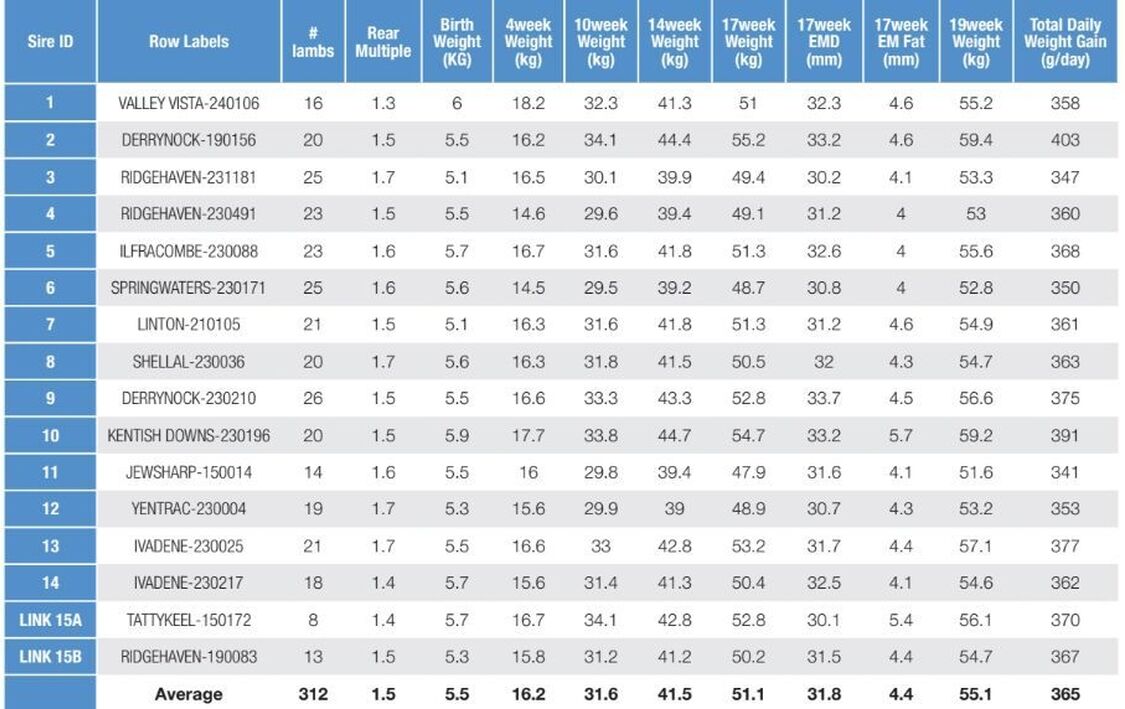
Growth of the lambs is measured at regular intervals to show actual weight gain at different stages of maturity.
Results included the heaviest lamb at:
4 weeks – 27.0kg
10 weeks – 48.5kg
14 weeks – 63.4kg
17 weeks – 72.6kg
TABLE 1 – Summary of On-Farm Performance, reported as averages per sire.
Open Day
The drop of lambs were made available to view on August 29 on property at Cudal NSW. This provided an opportunity for the sire contributors and the general public to visually appraise the lambs in their sire groups.
Rob McCartney from Yentrac at Tatura, Victoria, said it was valuable to look at the cohort of lambs, including those by a Yentrac sire.
“The best part was that we had progeny from rams from all sorts of genetic selection systems, and the end result was a draft of lambs which looked really good,” Mr McCartney said.
“They were all good Poll Dorset lambs that would have sold really well in the saleyards, and that says a lot about the breed that there is a depth of quality in the breed.”
Mr McCartney said there was great value in attending, and would imagine it would be just as valuable to go to the carcass viewing, which he was not able to attend due to the date being so close to his ram sale.
Carcass Testing
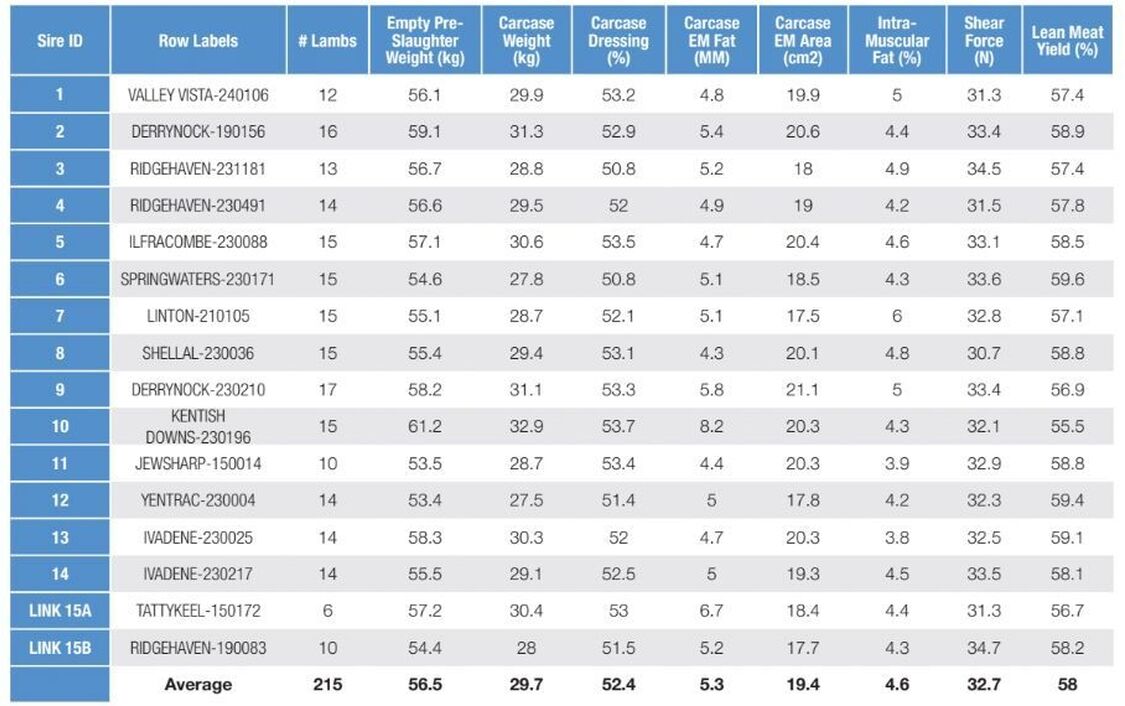
A selection of lambs was sent to Gundagai Meat Processors on September 23 where carcass data was collected by UNE Meat Science. The age of lambs at kill date ranged from 129 to 144 days (average 19 weeks).
Heaviest carcase – 41.05kg (HSCW)
Biggest EMA – 26.66 cm2 (EMD 49mm, EMW 68mm)
Highest IMF – 8.61%
The sire contributors were also invited to inspect the lambs on the hook.
Tania King, Shellal, Koroit, Victoria, made the journey up to Gundagai, NSW, and said it was an invaluable experience.
Ms King said the trial had allowed her to view the progeny of the sire she entered and how its carcasses stood up against those from other rams.
“What was reassuring for the breed was that there was not a huge difference between sires and that the quality was through all of them,” Ms King said.
“But some of the things I did notice were that some of the lambs that had the highest weights did not yield the most, and that intramuscular fat was not necessarily correlated with the heaviest lambs either.”
Ms King said another factor she noticed was the variation in fat cover when the lamb carcasses were cut up.
“I was pretty happy with how the lambs from my ram stacked up, especially since a lot of them were twins,” she said.
“Going to something like this, you learn a lot, and one of the things I noticed was that shape under the hindquarter can actually be fat rather than muscle.
“There were a lot of lambs that had really good shape and that was great to see.”
TABLE 2 – Summary of Carcase Performance, reported as averages per sire.