In August, Sheep Genetics launched the new Combined LAMBPLAN research analysis to the Australian sheep industry, to enable direct comparisons of the genetic merit of Maternal and Terminal animals within a single unified evaluation.
The Combined LAMBPLAN analysis will be a research analysis run in parallel with the current Terminal and Maternal analyses until the release of the final phase in early 2027. Phase one of the analysis has now been released, with growth, development and eating quality traits currently available. You can access ASBVs for phase one via the Sheep Genetics search site. Keep an eye out for phase two (incorporating lambing ease and WEC ASBVs), expected to be released in the coming months.
The following graphs show the average genetic trends for the Poll Dorset breed, Combined LAMBPLAN Terminal sire breeds, and Maternal sire breeds for postweaning weight (PWT), post weaning eye muscle depth (PEMD), intramuscular fat (IMF), and shear force (SHEARF5).
Post weaning weight shows a consistent upward trend, with Poll Dorsets performing higher than both the Combined Terminal and Combined Maternal sire breed averages, as shown in figure 1. Figure 2 illustrates that Poll Dorset post weaning eye muscle depth average performs similar to the Combined LAMBPLAN Terminal sire breeds average.
For eating quality traits, intramuscular fat and shear force (figures 3 and 4 respectively) share some potential opportunities for improvement. While Poll Dorsets traditionally prioritise growth and muscling traits, the Combined LAMBPLAN analysis highlights the potential for improving genetic performance in IMF and reducing SHEARF5.
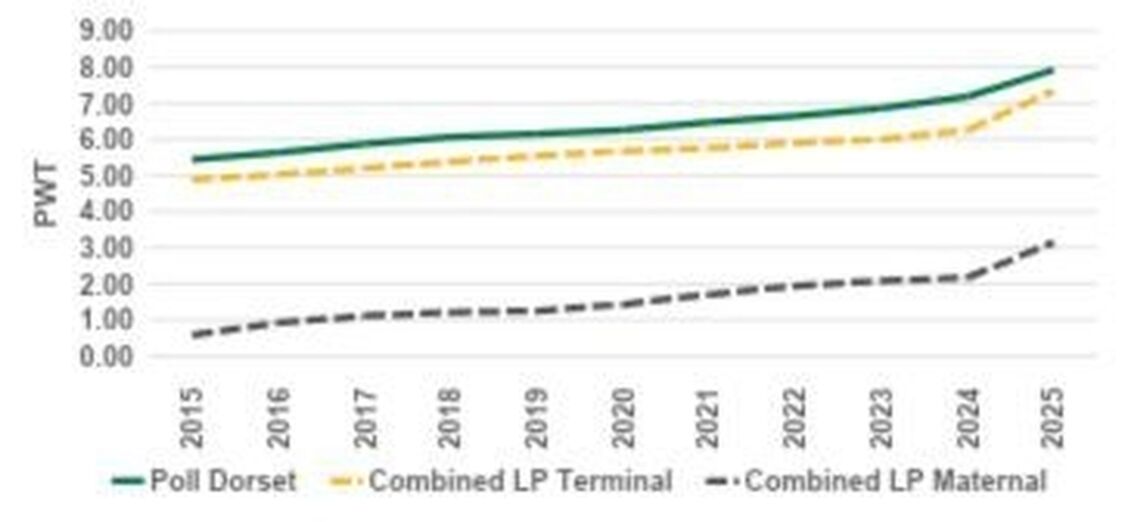
Figure 1. Combined LAMBPLAN genetic trends for post weaning weight (PWT) for Poll Dorset sheep breed in comparison to the Combined LAMBPLAN Maternal and Terminal sire breed averages
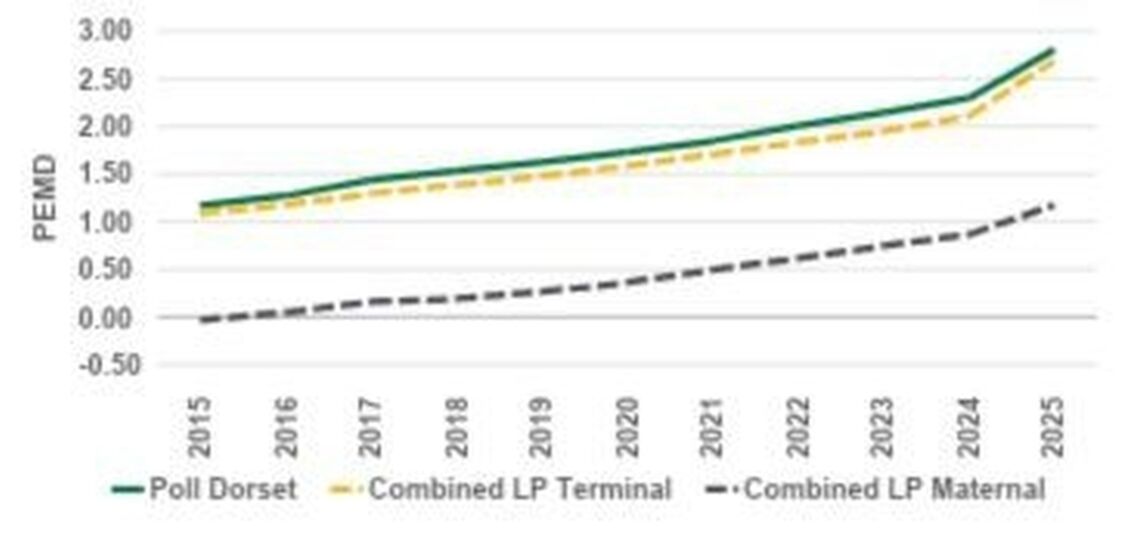
Figure 2. Combined LAMBPLAN genetic trends for post weaning eye muscle depth (PEMD) for Poll Dorset sheep breed in comparison to the Combined LAMBPLAN Maternal and Terminal sire breed averages.
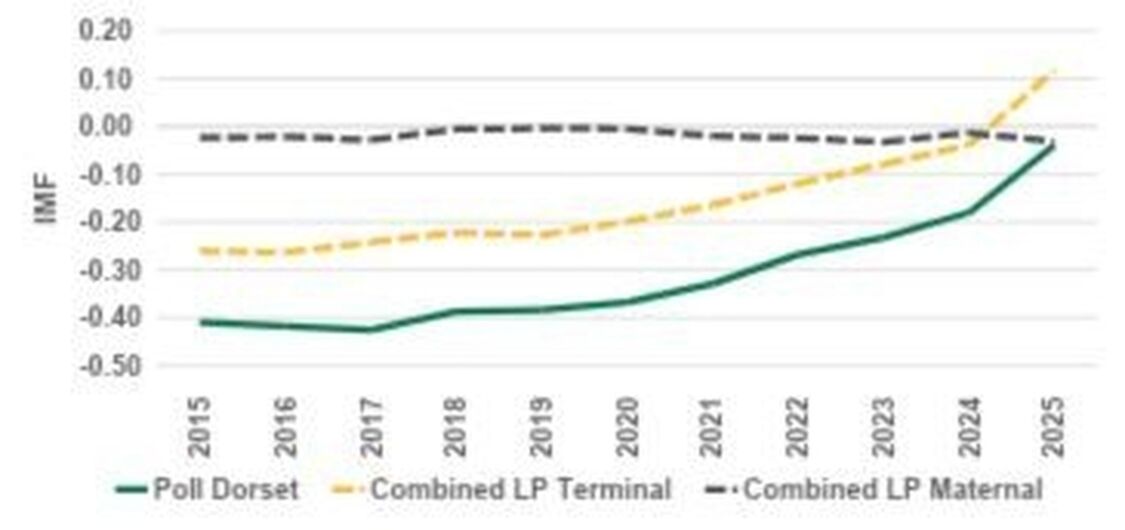
Figure 3. Combined LAMBPLAN genetic trends for intramuscular fat (IMF) for Poll Dorset sheep breed in comparison to the Combined LAMBPLAN Maternal and Terminal sire breed averages.
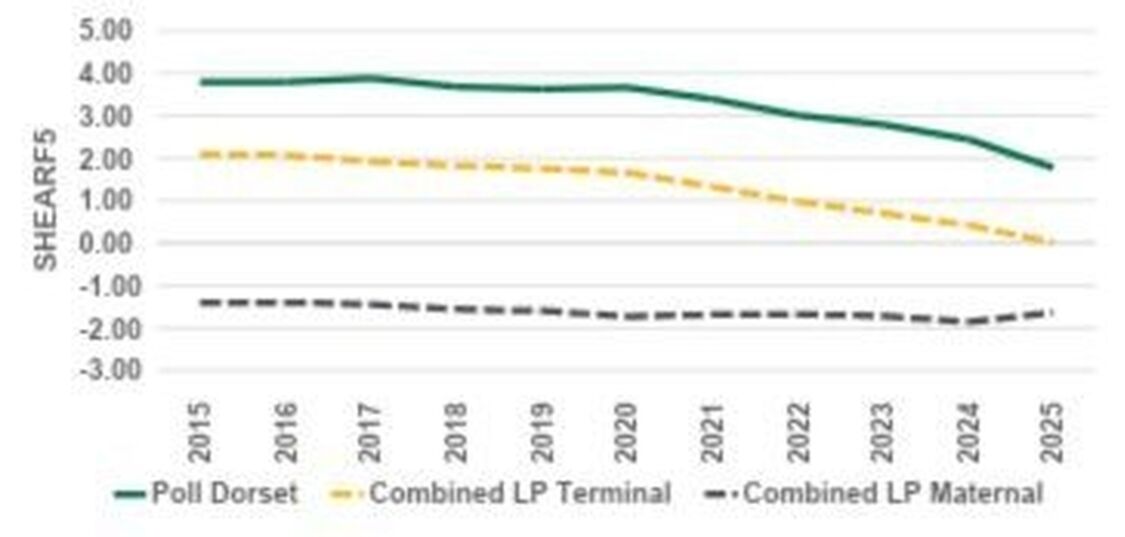
Figure 4. Combined LAMBPLAN genetic trends for shear force (SHEARF5) for Poll Dorset sheep breed in comparison to the Combined LAMBPLAN Maternal and Terminal sire breed averages
There were significant enhancements made to the evaluation underpinning the Combined LAMBPLAN analysis, therefore its results cannot be compared with the current Maternal and Terminal analyses. For this reason, we strongly recommend that breeders follow these steps to understand the changes within their flock.
Re-benchmark your flock: It is important for breeders to re-benchmark their flocks. While an animal’s ranking within the Percentile Bands (for example, top 5 per cent) should largely remain unchanged, the actual value of the ASBV may differ. To adjust, breeders should use the new Percentile Bands provided for Combined LAMBPLAN, which are available on the Sheep Genetics search site.
Use the Compare Tool and play around with your data: Sheep Genetics has developed a comparison tool specifically to assist breeders in quantifying the changes and re-ranking occurring in their flock by comparing ASBVs from the current Terminal and Combined LAMBPLAN analyses.
- Data Quality: Review your flock reports, update any exclusions or genomic pedigree inconsistencies in your on-farm software and resubmit to SG.
Resources and support: Sheep Genetics have developed a series of webinars, Analysis Enhancement booklets, and podcast episodes to provide insight into the Combined LAMBPLAN research analysis and what it means for your flock.
Set your flock up for success before joining
To set your flock up for success prior to joining, here are a few things you should consider!
Record pre-joining and condition score: We recommend recording a pre-joining weight and condition score (CS) measurement for all ewes within 30 days prior to joining and submit these measurements. Managing adult weight (AWT) and CS is important because they influence ewe fertility, lamb survival, and overall flock productivity, ensuring animals are in optimal condition for joining.
Validating your data quality: Accurate and high-quality data is important for making selection decisions – flocks that have high data quality make greater rates of genetic gain compared to flocks with low data quality. As stud breeders, you invest a lot of time and resources into recording traits, so it’s important that you’re getting the most out of your data.
Before each data submission, make sure to validate your data, this will increase the quality of information used in the genetic evaluation. After submission, it’s important to check for any data exclusions or genomic pedigree inconsistencies and update them in your on-farm software and resubmit that data file to Sheep Genetics.
You can also check the quality/effectiveness of your data by logging onto the Sheep Genetics website and accessing your Data Quality Score (DQS) report.
Remember, the evaluation can only work with the data you provide. Take the time now to measure, check, and submit with confidence, and set your flock up for success!
Make your data count – Submit pregnancy scan data to SG
To support the development of the upcoming component reproduction module in the Combined LAMBPLAN analysis, we are asking producers to submit their pregnancy scan data to Sheep Genetics for R&D purposes. If you have pregnancy scan data and haven’t previously supplied it to Sheep Genetics, please submit your scan results by Christmas.
The component reproduction analysis to be released in Combined LAMBPLAN is a more accurate measure of reproductive performance. As a Poll Dorset stud breeder, submitting your pregnancy scan data will help improve the accuracy of component reproduction ASBVs and introduce the variation in data needed to assess reproductive performance.
The component reproduction traits include conception (CON), litter size (LS), and ewe rearing ability (ERA). The breakdown of reproduction into these components has allowed breeders to make more targeted genetic gain in the different drivers of reproduction. Figure 5 illustrates the change in the relative economic value (REV) for each component trait at different average flock litter size for the overall weaning rate (WR) ASBV. As litter size increases (x-axis), the economic importance of improving rearing ability continues to increase, maximising lamb survival and productivity.
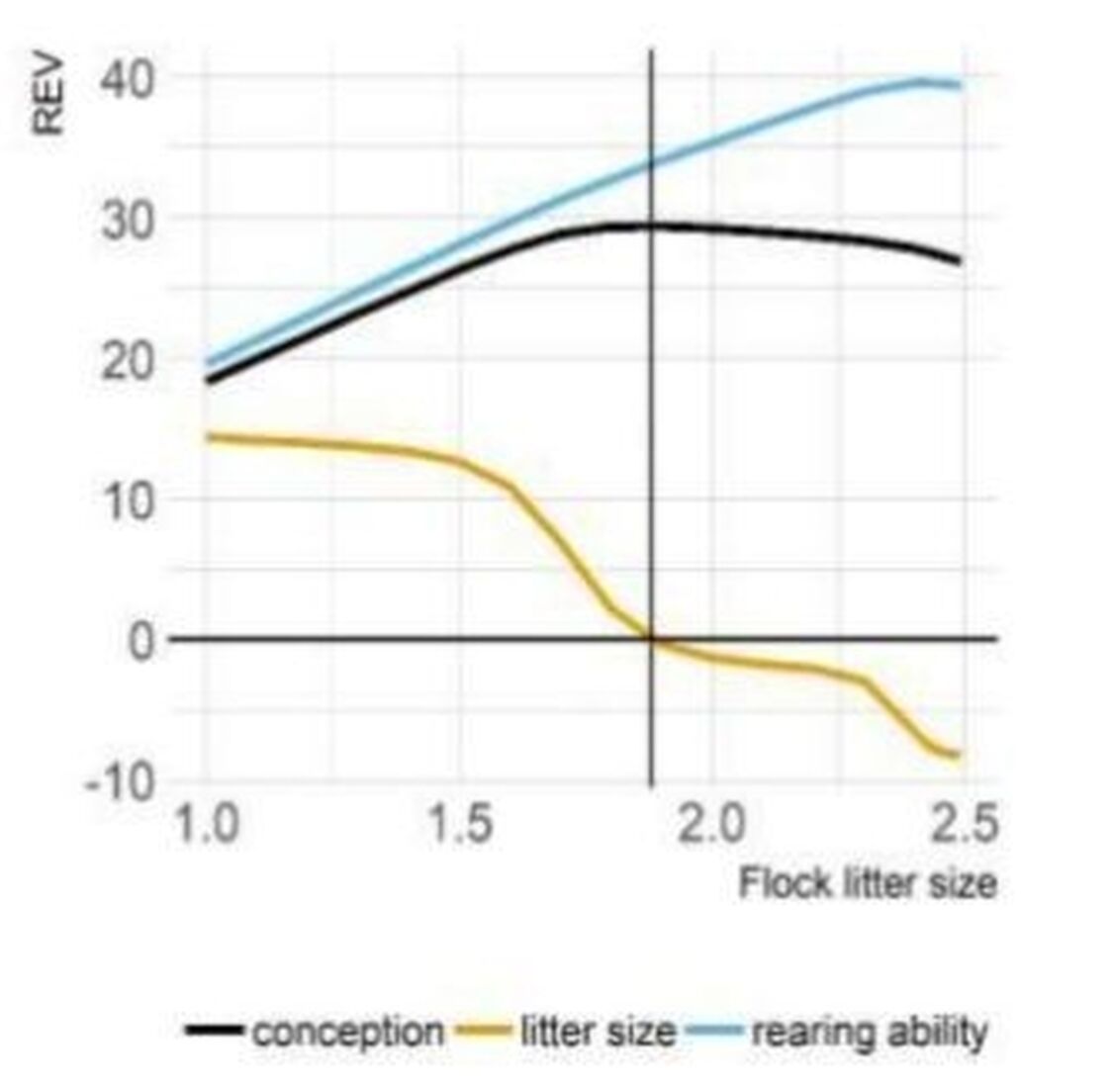
Figure 5. The change in relative economic value (REV) for each component trait at different flock litter sizes.
Please contact Sheep Genetics if you have any questions.
Sophie Hawkins
Development Officer
Sheep Genetics
0437 588 064