A trip to Australia has opened the eyes of New Zealand Poll Dorset breeder Pete Gardyne and he’s keen to keep monitoring what’s happening over the ditch.
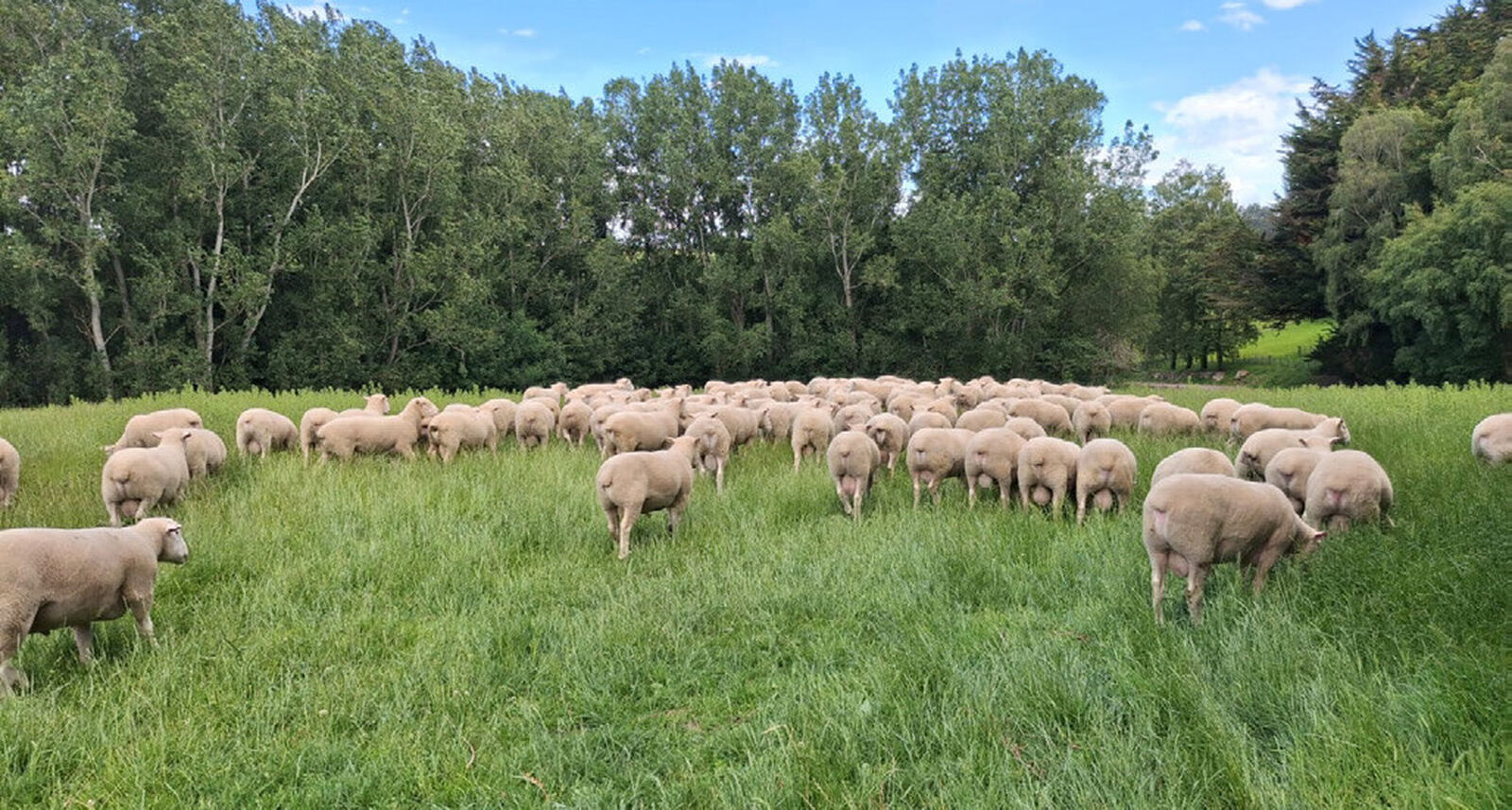
A mixed farmer from the far south of the South Island, Pete and wife Esther and their four boys took over the Ohio Poll Dorset stud about three years ago.
The commercial arm of their operation had been using the Ohio genetics for decades to produce prime lambs, and Pete’s interest in genetics prompted him to talk about acquiring the stud if it was ever available.
That opportunity came up in 2022, when Trevor Potter sold the stud to the Gardynes, but still has an advisory role in the operation.
The Ohio stud has used Australian semen in the past, and Pete said he was keen to see first hand the kinds of sheep here.
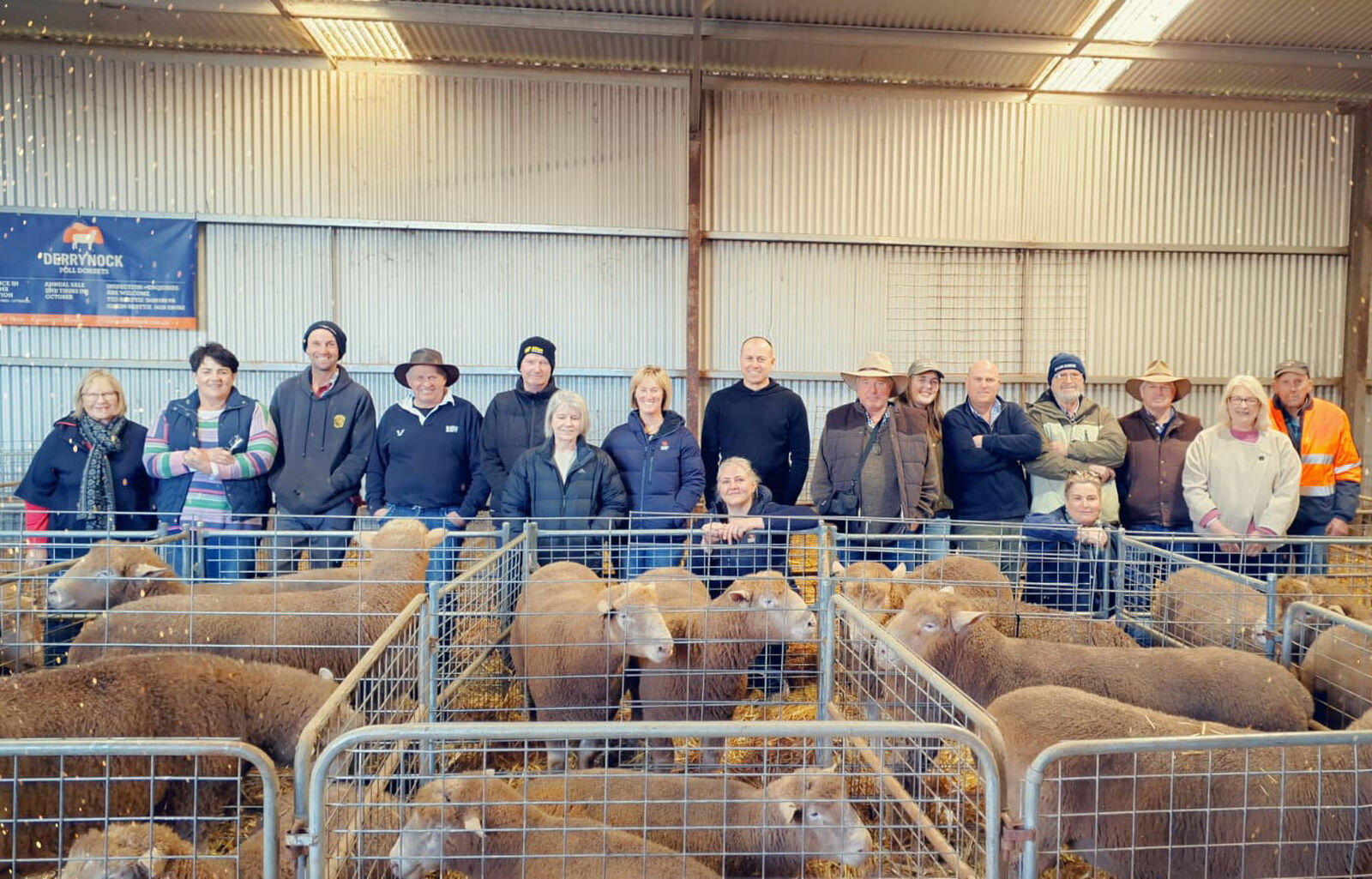
Pete and a group of other NZ breeders, visited the Australian Sheep and Wool Show at Bendigo, Victoria, before going on a tour of local studs to the area. He then extended his visit, travelling in a zig zag pattern across south-eastern Australia and taking in as much as he could before flying out of Sydney.
That itinerary included visits to studs and the Bowan Park Research Flock near Cudal, NSW.
Pete said Australian Poll Dorsets were impressive, not only in the quality of stock but also the number and scale of operations.
“In New Zealand, it’s normal to sell about 100 rams but we saw studs in Australia that were doing well in excess of that,” he said.
He also saw the push by some breeders into working on eating quality traits, particularly intramuscular fat and shear force.
“As an industry, it is important that there is a push to get rid of bad eating quality lamb,” Pete said.
“In Australia, the industry tends to kill lambs later (older age) so eating quality plays into this, with the average kill weight in Australia much higher than it is in New Zealand, where the average kill is probably 18 or 19 kilograms carcass weight.”
In his own commercial operation, where he joins about 5000 ewes, lambs come out at about 22-23 carcass weight.
The doing-ability of Poll Dorsets was also on show, he said, when visiting studs in Victoria where the season was not favourable.
“What was really impressive was to see Poll Dorsets which looked in good condition and they were doing this in poor feed conditions,” he said.
One factor which he noted in discussions with Australian breeders, but which isn’t an issue in New Zealand, was birthweight. While it is a factor in selection here, Pete said selection pressures which culled ewes with high/low birthweights or problematic birthing/poor mothering, had made the trait that was not a factor in commercial ram buyers decision making.
“I was surprised with the focus on this in Australia,” he said.
Pete is keen to access Australian genetics, but will not lose focus on what he said made his clients money, which was quick growing lambs which were able to be finished to kill weights.
He knows his goal - to be one of the top 10 Poll Dorset studs in New Zealand - will only come if his clients make money.
And that means using a mix of indexes and phenotype for selection, making sure the feet are right on rams given the wet climates they go into, and have survivability and constitutions which can handle the climate.
Pete has found he has been welcomed into the Poll Dorset breeding world in NZ, and said there was a collegiate and co-operative attitude to fellow breeders.
“New Zealand Poll Dorset breeders are very supportive, and the breed is healthy here - we are seeing an increase in market share for terminal breeds,” he said.
“The key thing we all have to do is keep breeding rams that are commercially relevant.”